BEYOND AMBIENT: NEW EMERGING TRAJECTORIES BETWEEN ELECTROACOUSTICS, THE BODY, AND THE SONIC ENVIRONMENT, IMAGINING NEW TRENDS
To reflect on sound not as an object, but as a relationship: between body and environment, between data and perception, between space and listening || EN/ITA TEXT ||

To reflect on sound not as an object, but as a relationship: between body and environment, between data and perception, between space and listening.
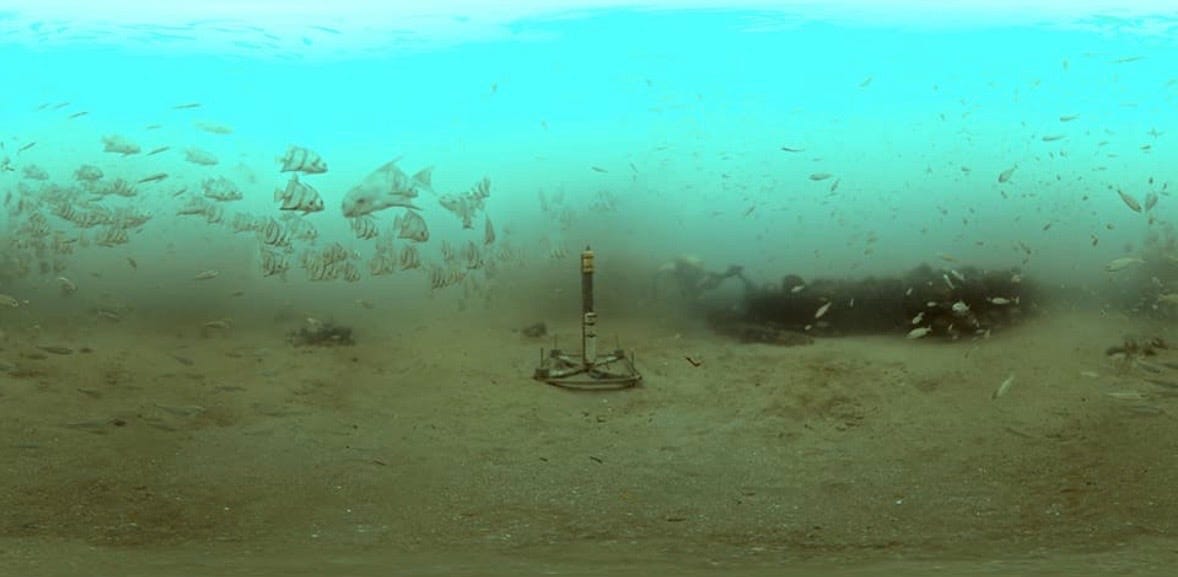
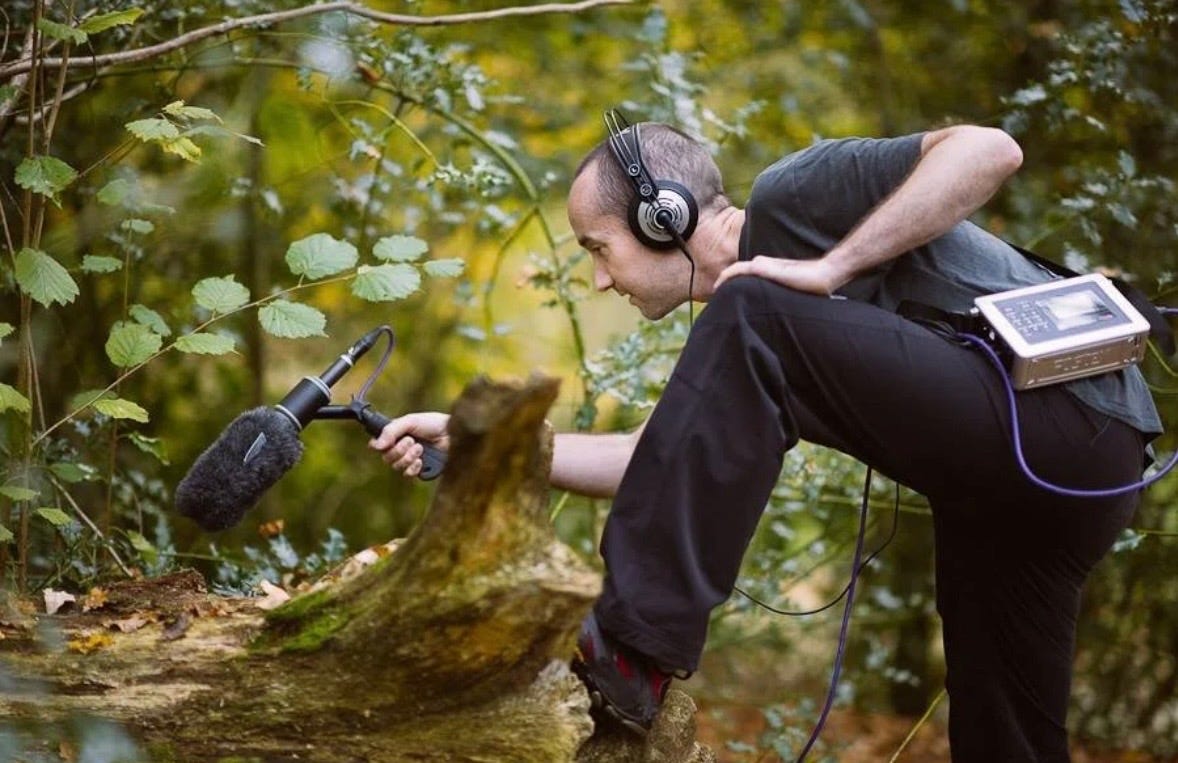
One of the most evident trajectories concerns the relationship with the natural world, though no longer in the now familiar terms of soundscape or contemplative field recording.
It is where sound becomes measurement, translation, transformation. Climatic data, geological phenomena, atmospheric variations enter composition not as metaphor, but as material itself.
This is a music that reads the world, moves through it, renders it audible according to other coordinates. One might give this tendency a name that carries both the resonance of an ancient discipline and the promise of a new science: #ambientiometry. A term suggesting a mode of listening capable of measuring and, at the same time, of giving sensible form to what would otherwise remain invisible.
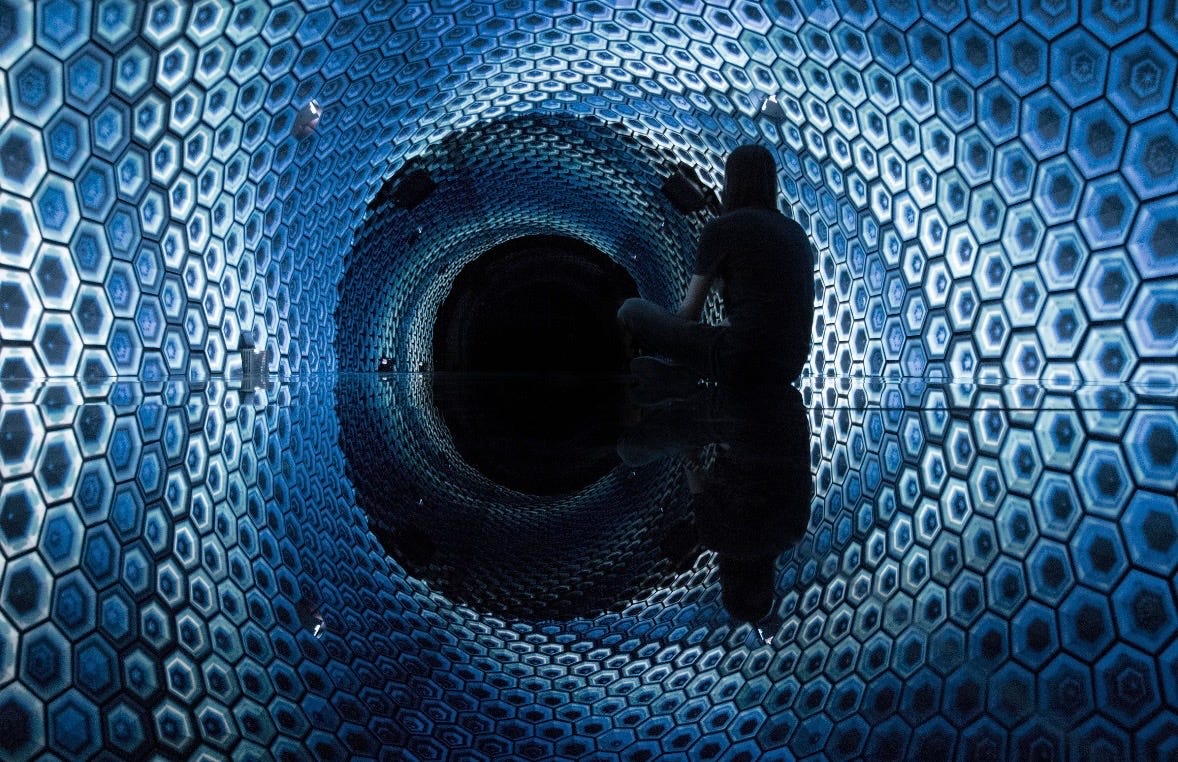
Alongside this, and perhaps even more radically, another movement begins to appear, more intimate, more restless.
The body is no longer merely the site of listening or performance, but becomes a direct source of sound. Sensors, muscular signals, physiological data: everything belonging to the organic dimension is translated into sonic language. It is no longer the machine extending the body, as in the tradition of live electronics; it is the body itself that becomes machine, interface, instrument. Here sound is born from muscular tension, from a nervous impulse, from an inner rhythm. It is a music that listens from within.
#Somatoacoustics could be the name of this drift, a term that binds flesh and vibration, physiology and form.
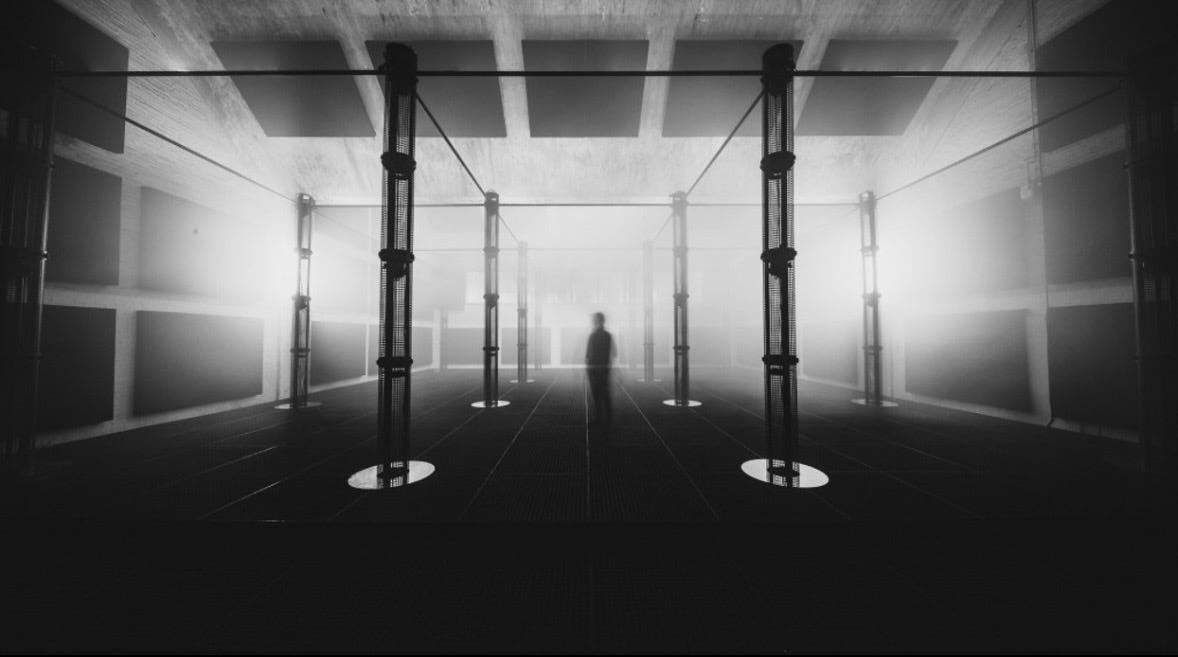
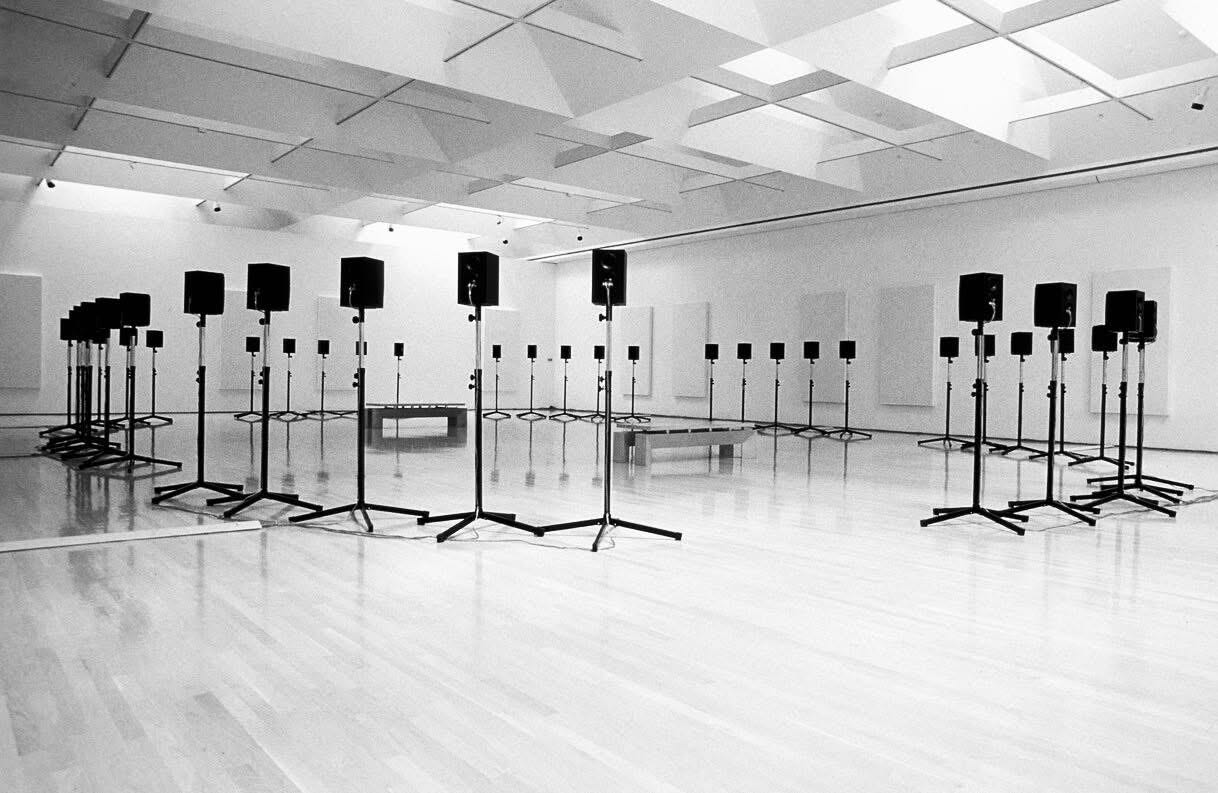
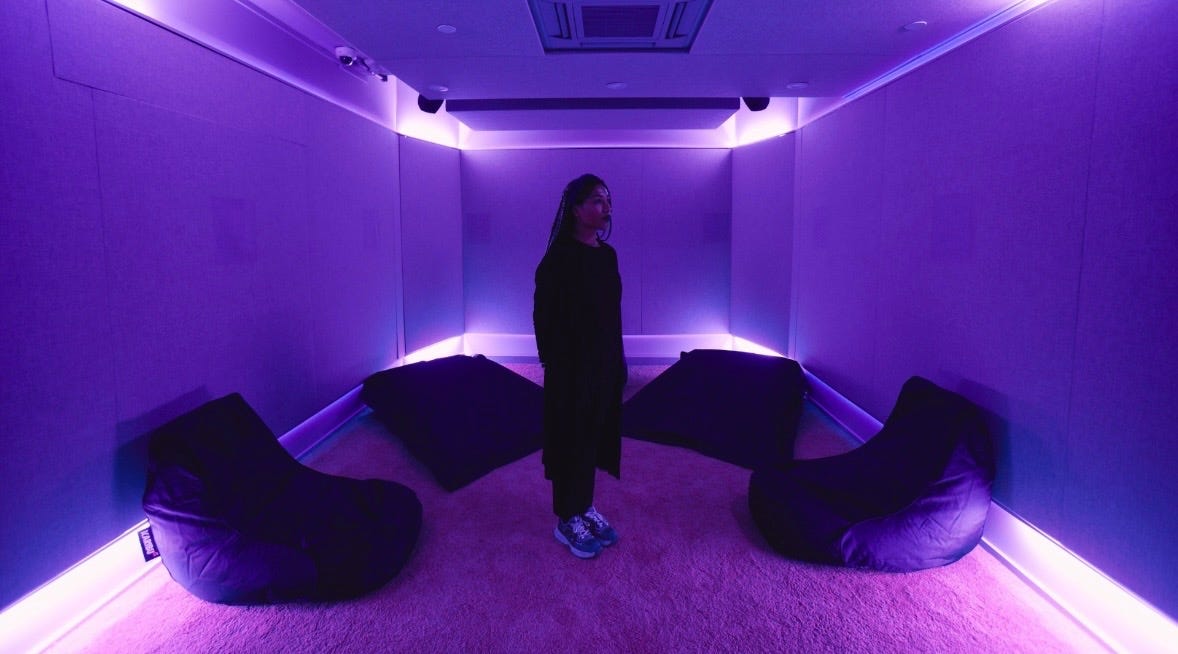
Meanwhile, acousmatics too, perhaps the most codified territory in this field, seems to be undergoing a subtle yet decisive transformation. The paradigm of the concert in darkness, of controlled diffusion, of the work fixed on a medium, is opening up. Spaces become porous, traversable; listening grows mobile, immersive, at times unstable.
Ambisonic systems, hybrid installations, devices combining headphones and loudspeakers, environments that respond to the presence of the body: all of this helps dissolve the boundaries between inside and outside, between work and context, toward a listening that is constructed in space.
This is a new phase we might call #porous #acousmatics, where the work is no longer a closed object, but a field of experience.
At the same time, one can glimpse a direction still little explored yet already charged with possibility: that of connected sonic environments. Distributed sensors, networks, databases, devices in dialogue with one another: sound emerging from a system.
It is an ambient practice nourished by flows, by connections, by invisible relations, in some sense an act of listening to a network.
#Networked #Ambient could be the name of this perspective, still embryonic, yet destined to leave a profound mark on future practices.
And then there is artificial intelligence.
Not so much the kind that imitates, that replaces the author, but the kind that works as a timbral laboratory, a machine of possibilities. Text, image, description: from these elements arise complex soundscapes, structures in continuous transformation, materials then shaped, refined, brought back into a vision. AI as a means of opening new regions of sound.
One possible term, perhaps inevitably angular, is #promptacoustics: a name that signals the presence of a new gesture, that of “asking” sound to emerge.

Finally, there is the dimension that brings sound back to the body, though from another angle: that of touch, vibration, physical perception.
Haptic systems, bodily feedback, installations that are also listened to through the skin: sound expands beyond the audible, becoming a complex sensory experience. No longer listening alone, but immersion.
#haptoacoustics, to indicate a field in which sound is not merely heard, but literally felt.
Let us insist and go still further: #somatoacoustics, for its capacity to redefine the relationship between body and sound, and #ambientiometry, for the way it transforms listening to the world into an act of knowledge.
To look, or rather to listen, beyond. Never to tire of asking whether other paths toward listening exist, and to imagine them, then bring that imagination to bear upon the real.
***l’articolo in lingua italiana, è stato pubblicato sulla mia pagina pagina Facebook
OLTRE L’AMBIENT: NUOVE TRAIETTORIE EMERGENTI TRA ELETTROACUSTICA, CORPO E AMBIENTE SONORO IMMAGINANDO NUOVE TENDENZE ::
Interrogarsi sul suono non come oggetto, ma come relazione: tra corpo e ambiente, tra dato e percezione, tra spazio e ascolto.
Una delle traiettorie più evidenti riguarda il rapporto con il mondo naturale, ma non più nei termini ormai classici del paesaggio sonoro o del field recording contemplativo.
Lì dove il suono diventa misura, traduzione, trasformazione. I dati climatici, i fenomeni geologici, le variazioni atmosferiche entrano nella composizione non come metafora, ma come materia stessa.
È una musica che legge il mondo, lo attraversa, lo rende udibile secondo altre coordinate. A questa tendenza si potrebbe dare un nome che sa di disciplina antica e scienza nuova insieme: #ambientiometria. Un termine che suggerisce un ascolto capace di misurare e, al tempo stesso, di restituire una forma sensibile a ciò che altrimenti resterebbe invisibile.
Accanto a questo, e forse ancora più radicale, si affaccia un altro movimento, più intimo, più inquieto.
Il corpo non è più soltanto il luogo dell’ascolto o della performance, ma diventa sorgente diretta del suono. Sensori, segnali muscolari, dati fisiologici: tutto ciò che appartiene alla dimensione organica viene tradotto in linguaggio sonoro. Non è più la macchina a estendere il corpo, come nella tradizione della live electronics; è il corpo stesso che si fa macchina, interfaccia, strumento. Qui il suono nasce da una tensione muscolare, da un impulso nervoso, da un ritmo interno. È una musica che ascolta dall’interno.
#Somatoacustica potrebbe essere il nome di questa deriva: un termine che tiene insieme carne e vibrazione, fisiologia e forma.
Nel frattempo, anche l’acusmatica, forse il territorio più codificato di questo campo, sembra attraversare una trasformazione sottile ma decisiva. Il paradigma del concerto al buio, della diffusione controllata, dell’opera fissata su supporto si apre. Gli spazi diventano porosi, attraversabili; l’ascolto si fa mobile, immersivo, talvolta instabile.
Sistemi ambisonici, installazioni ibride, dispositivi che combinano cuffie e diffusori, ambienti che reagiscono alla presenza del corpo: tutto contribuisce a dissolvere i confini tra dentro e fuori, tra opera e contesto: un ascolto che si costruisce nello spazio.
È una nuova fase che potremmo chiamare #acusmatica #porosa, dove l’opera non è più un oggetto chiuso, ma un campo di esperienza.
Parallelamente, si intravede una direzione ancora poco esplorata ma già carica di possibilità: quella degli ambienti sonori connessi. Sensori distribuiti, reti, database, dispositivi che dialogano tra loro: il suono che emerge da un sistema.
È un’ambient che si nutre di flussi, di connessioni, di relazioni invisibili, in qualche modo, ascolto di una rete.
#Ambient #reticolare potrebbe essere il nome di questa prospettiva, ancora in fase embrionale, ma destinata a incidere profondamente sulle pratiche future.
E poi c’è l’intelligenza artificiale.
Non tanto quella che imita, che si sostituisce all’autore, ma quella che lavora come un laboratorio timbrico, una macchina di possibilità. Testo, immagine, descrizione: da questi elementi nascono paesaggi sonori complessi, strutture in continua trasformazione, materiali che vengono poi scolpiti, rifiniti, ricondotti a una visione. L’AI come mezzo per aprire nuove regioni del suono.
Un termine possibile, forse inevitabilmente spigoloso, è #promptacustica: un nome che segnala la presenza di un gesto nuovo, quello del “chiedere” al suono di emergere.
Infine: la dimensione che riporta il suono al corpo, ma da un’altra angolazione: quella del tatto, della vibrazione, della percezione fisica.
Sistemi aptici, feedback corporei, installazioni che si ascoltano anche con la pelle: il suono si espande oltre l’udibile, diventa esperienza sensoriale complessa. Non più soltanto ascolto, ma immersione.
#aptoacustica, a indicare un campo in cui il suono non si limita a essere udito, ma viene letteralmente sentito.
Insistiamo e andiamo ancora più oltre: la #somatoacustica, per la sua capacità di ridefinire il rapporto tra corpo e suono, e l’#ambientiometria, per il modo in cui trasforma l’ascolto del mondo in atto conoscitivo.
Guardare o meglio, ascoltare oltre. Non stancarsi di chiedersi se esistono altre vie all’ascolto, immaginare e applicare tale immaginazione al reale.